




Yang Zi was once regarded as one of the leading traffic actresses in the Chinese entertainment industry. However, even after winning the Magnolia Award for Born to Be Alive, she has yet to receive complete recognition from the public. Instead, debates over her acting skills, projects, and even the value of her Best Actress win have continued to follow her.
Born to Be Alive was expected to help Yang Zi complete her transition from an idol-style actress to a serious drama performer. The series earned an 8.3 rating on Douban, while Yang Zi’s performance received recognition from some viewers and industry professionals. She had also been nominated for the Magnolia Award four times before finally winning.

However, controversy erupted almost immediately after Yang Zi received the award. Some viewers compared her with actresses such as Sun Li, Wu Yue, and Ren Suxi, performers who are widely respected for their acting abilities and long-standing work in realistic dramas. Some audiences argued that Yang Zi’s performance was not convincing enough to surpass these competitors.
Her background as a traffic actress has also made her every move subject to intense scrutiny. This led to negative speculation about how Yang Zi won the award, with some people even suggesting that she had “bought” it. These claims remain unsubstantiated online speculation and cannot be treated as fact, but they nevertheless illustrate that the Magnolia Award has not completely erased the public’s perception of Yang Zi as a “traffic actress.” In other words, she may now have the Best Actress title, but she has yet to gain widespread public consensus regarding her status as a serious drama actress.
Popularity Remains High, but Her Commercial Appeal Is Questioned

Beyond the award controversy, another contradiction has emerged: Yang Zi remains highly recognizable, yet her commercial appeal is reportedly not always considered proportional to her fame. According to some assessments circulating online, her Douyin data has not been particularly impressive, while her Weibo figures remain strong but are reportedly less efficient in terms of cost. This has increasingly raised questions about whether her traffic can effectively be converted into commercial value.
Yang Zi has never possessed the kind of exceptionally striking beauty that immediately distinguishes her from other actresses in the Chinese entertainment industry. She has repeatedly been described as a “pu nv,” a term referring to relatively ordinary-looking women, particularly when compared with the large number of conventionally beautiful stars in show business.
As a former child actress, Yang Zi was once told by Song Dandan that her appearance was not beautiful enough to become an actress. She eventually built a successful career through her acting skills and a series of popular productions. However, after becoming a top female star, appearance and personal charisma have also become increasingly important parts of an entertainer’s commercial value.

This is one reason why Yang Zi’s appearances alongside actresses with particularly strong visual presence often become subjects of discussion. Debates surrounding her styling, figure, filters, and allegedly unnatural-looking facial features have appeared with some frequency.
Even fashion opportunities backed by significant resources have not always succeeded in elevating her image. In one birthday feature, Yang Zi wore nearly 20 outfits, including four new Haute Couture designs. Yet the styling still sparked controversy, with some viewers arguing that the clothes failed to bring out the actress’s charisma. For a traffic star, this is not simply a question of whether an outfit looks good or bad. When appearance and personal presence fail to create a distinctive image, turning a large fan base into fashion and commercial influence can also become more difficult.
Leaving Weibo for Xiaohongshu, but the Move Has Yet to Pay Off

Perhaps against this backdrop, Yang Zi and her management team made a notable move by reducing their reliance on Weibo hot searches and shifting more attention toward Xiaohongshu. While Weibo was once the platform where Yang Zi built her status as a top traffic star, Xiaohongshu is more strongly associated with fashion, beauty, lifestyle, and consumer trends. The platform shift was therefore seen as an attempt to seek stronger commercial data while opening a new direction for the actress’s image.
Initially, the move was expected to give Yang Zi a new “battlefield.” However, the results have reportedly been less encouraging. According to the information provided, after joining Xiaohongshu, Yang Zi appeared in only two Weibo hot searches over the following month. On Xiaohongshu, engagement also reportedly declined noticeably after an initial period of platform-supported traffic, while her account has yet to reach one million followers.

As a result, some bloggers have characterized the platform switch as a failed escape rather than a successful strategy. More importantly, while Xiaohongshu has yet to generate the expected impact, Weibo the platform that was once Yang Zi’s home ground also appears to have lost some of its former momentum.
The frequency of her hot-search appearances has reportedly declined significantly. Events that once had the potential to generate massive exposure no longer create the same overwhelming buzz associated with her peak traffic-star years. Even when she appeared at the Hundred Flowers Awards, some observers noted that Yang Zi’s popularity and media exposure were no longer what they once were. A star once accustomed to dominating trending topics now appears to be looking for another platform on which to build her numbers. Ironically, the new platform has yet to deliver the desired breakthrough, while her old home is also losing steam.
Even Her Acting Career Is Facing Setbacks

If the Weibo and Xiaohongshu developments reflect concerns about popularity, her acting projects will ultimately determine whether Yang Zi can truly maintain her position.
After Born to Be Alive, the actress placed further hopes in The Heir, a project regarded as an important step in her attempt to move toward serious historical drama.
The series aired during CCTV-8’s prime-time slot and opened with ratings exceeding 1.5%. Centered on the traditional craft of Huizhou ink-stick making, the production incorporated elements of Chinese cultural heritage and was once expected to become another breakthrough for Yang Zi. However, reactions reportedly began to decline shortly after its premiere. According to the information provided, The Heir’s Douban rating fell below 5.2 after 48 hours, while its Maoyan popularity index declined for three consecutive days. The script and performances of the main cast became major points of discussion.
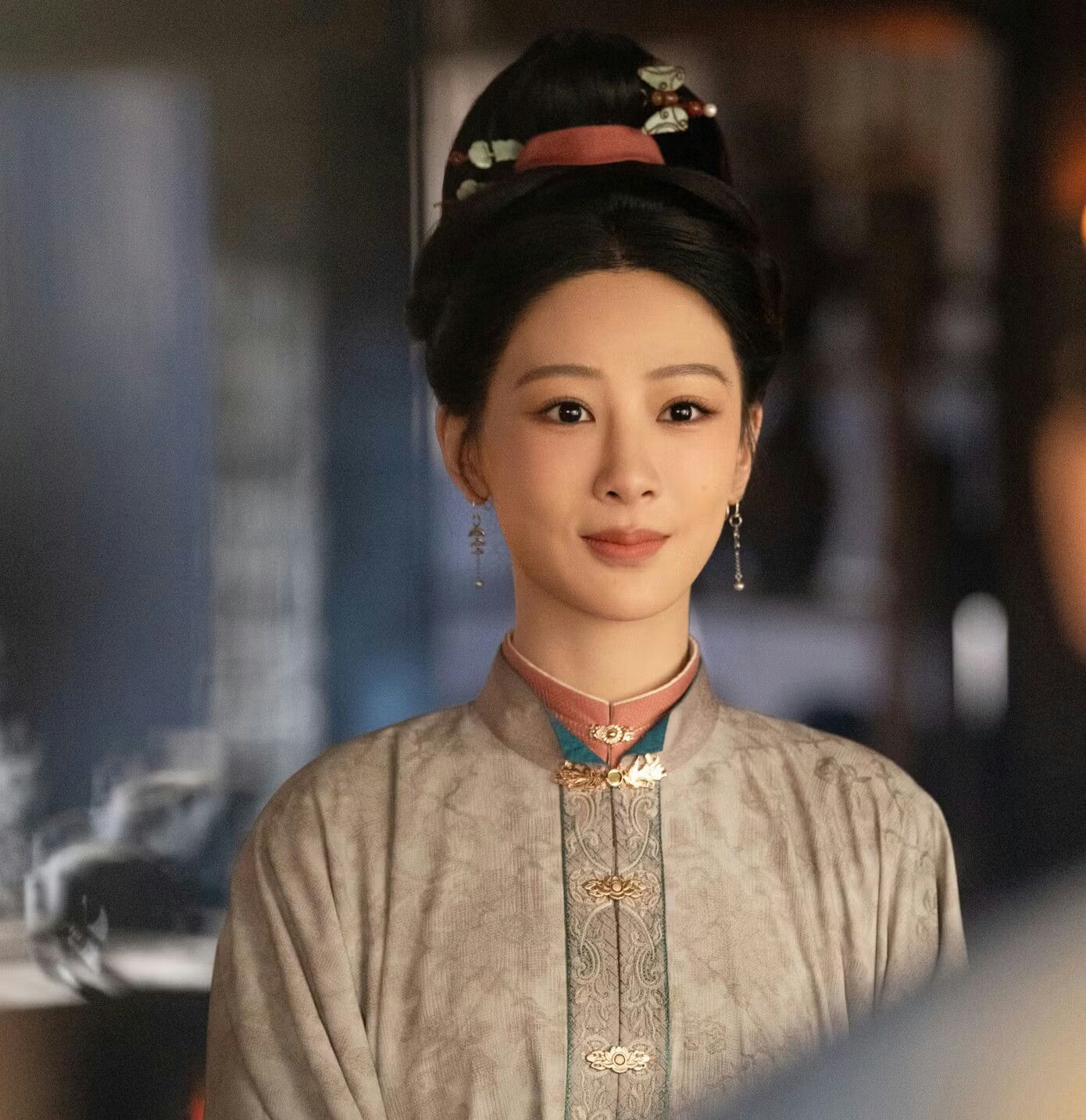
Yang Zi also once again faced criticism over her appearance. Many viewers reportedly felt that the drama used overly heavy filters, making the actress’s face appear unnatural. The topic “Yang Zi’s new drama uses overly heavy filters” even climbed Weibo’s trending searches shortly after the premiere.
This has been particularly unfavorable for the actress because The Heir was expected to be her next opportunity to prove that she could move beyond the idol-drama category. Yet after the series premiered, the most prominent discussions once again centered on the script, acting, and appearance. From Born to Be Alive to The Heir, Yang Zi has still not produced a project powerful enough to make the public collectively change its perception of her.
Yang Zi remains a highly recognizable name, but the popularity and advantages that once placed her at the top of China’s traffic-star hierarchy appear to be gradually weakening. From debates over her acting and Magnolia Award win to questions about her commercial appeal and her shift toward Xiaohongshu, none of these developments has yet demonstrated a truly successful transformation.
She may have left her old battlefield in search of a new path, but for now, Yang Zi still appears to be searching for her way out.
Sources: K14