




Perfect Crown entered 2026 as one of the year’s most anticipated Korean dramas, thanks largely to the casting of IU and Byeon Woo Seok.
From its teaser posters to the official production presentation attended by MBC executives, the series generated enormous buzz even before its premiere. However, as the drama approaches its finale with only two episodes remaining, criticism surrounding the show’s storytelling has continued growing.
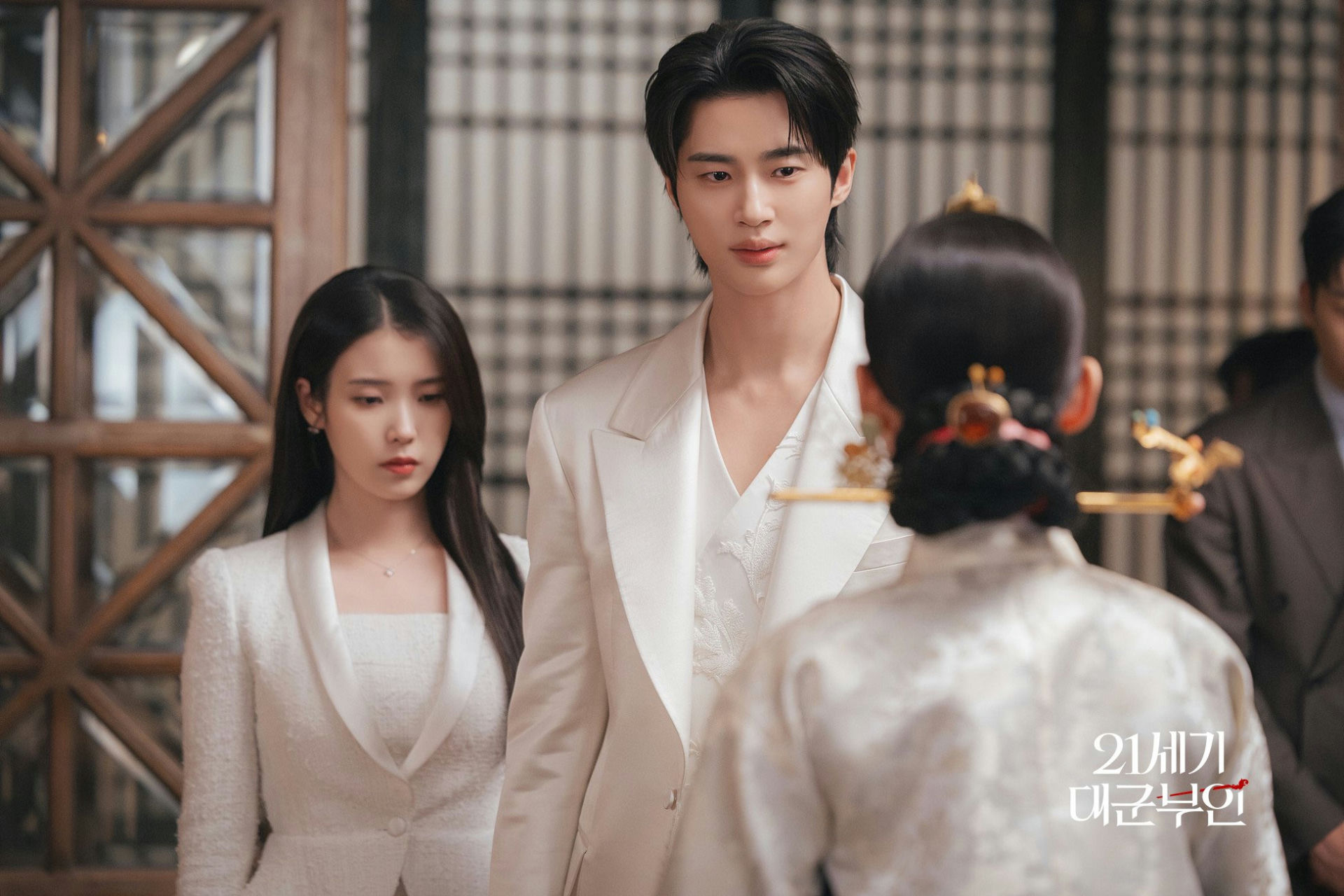
When the drama premiered on April 10, it recorded an impressive 7.8% nationwide rating according to Nielsen Korea, becoming one of MBC’s highest-rated Friday-Saturday drama premieres.
Early discussions initially focused on the acting performances of IU and Byeon Woo Seok. Some viewers questioned whether the leads fully matched the tone of the romantic comedy genre. However, as the series progressed, many audiences felt the chemistry between the actors gradually improved, causing much of the acting criticism to fade.
Instead, viewers increasingly began pointing to deeper structural problems within the drama itself particularly its weak narrative logic and repetitive plot progression.
One of the biggest complaints online involves the drama’s repeated use of palace fire incidents as a major storytelling device.

According to viewers, the series has now featured three major palace fire sequences in a relatively short span of episodes, causing frustration and even ridicule among audiences.
The first fire led to the sudden death of the former king during a confrontation involving Queen Dowager Yoon Yi Rang, played by Gong Seung Yeon, and King Lee Hwan, played by Sung Joon. The incident ultimately triggered a political succession crisis and allowed Prince I-an, Byeon Woo Seok’s character, to assume regency duties.
The second fire occurred after Seong Hui Ju, portrayed by IU, wandered into a restricted palace area during a royal event. An explosion followed, resulting in another major fire and leading to Hui Ju becoming a prime suspect.
Most recently, the drama introduced a third palace fire, once again involving explosions and political danger. The repeated use of the same dramatic device has led viewers to sarcastically question whether “fire is the only source of tension in the series.”

Beyond the fire incidents, the drama has also faced criticism for its depiction of a modern constitutional monarchy.
Recent episodes involving the succession of an eight-year-old king sparked debate because the story appeared to bypass parliamentary or constitutional procedures entirely. Critics argued that in real constitutional monarchies such as those in the United Kingdom or Japan, matters involving abdication, regency, and royal succession would require legal processes and institutional approval.
Some viewers believe the drama’s fictional political system lacks enough realism to maintain immersion, especially because the series portrays the royal family as actively involved in national power and governance rather than serving as symbolic figures.

Many audiences have compared the drama to Princess Hours (Goong), which also used a modern monarchy setting but focused more heavily on romance and fantasy elements.
In contrast, Perfect Crown attempts to blend romance with political intrigue and palace power struggles. However, critics argue the execution often feels exaggerated and unrealistic.
Among the most commonly criticized scenes are:
- Frequent palace security failures despite the supposedly strict royal protection system
- Vehicle brake sabotage incidents
- Poisoning attempts during royal weddings
- Repeated large-scale explosions and fires within the palace
While the drama still maintains strong buzz thanks to IU and Byeon Woo Seok’s popularity, growing portions of the audience believe the series relies too heavily on sensational twists instead of carefully developed storytelling.
Sources: 네이트 뉴스