



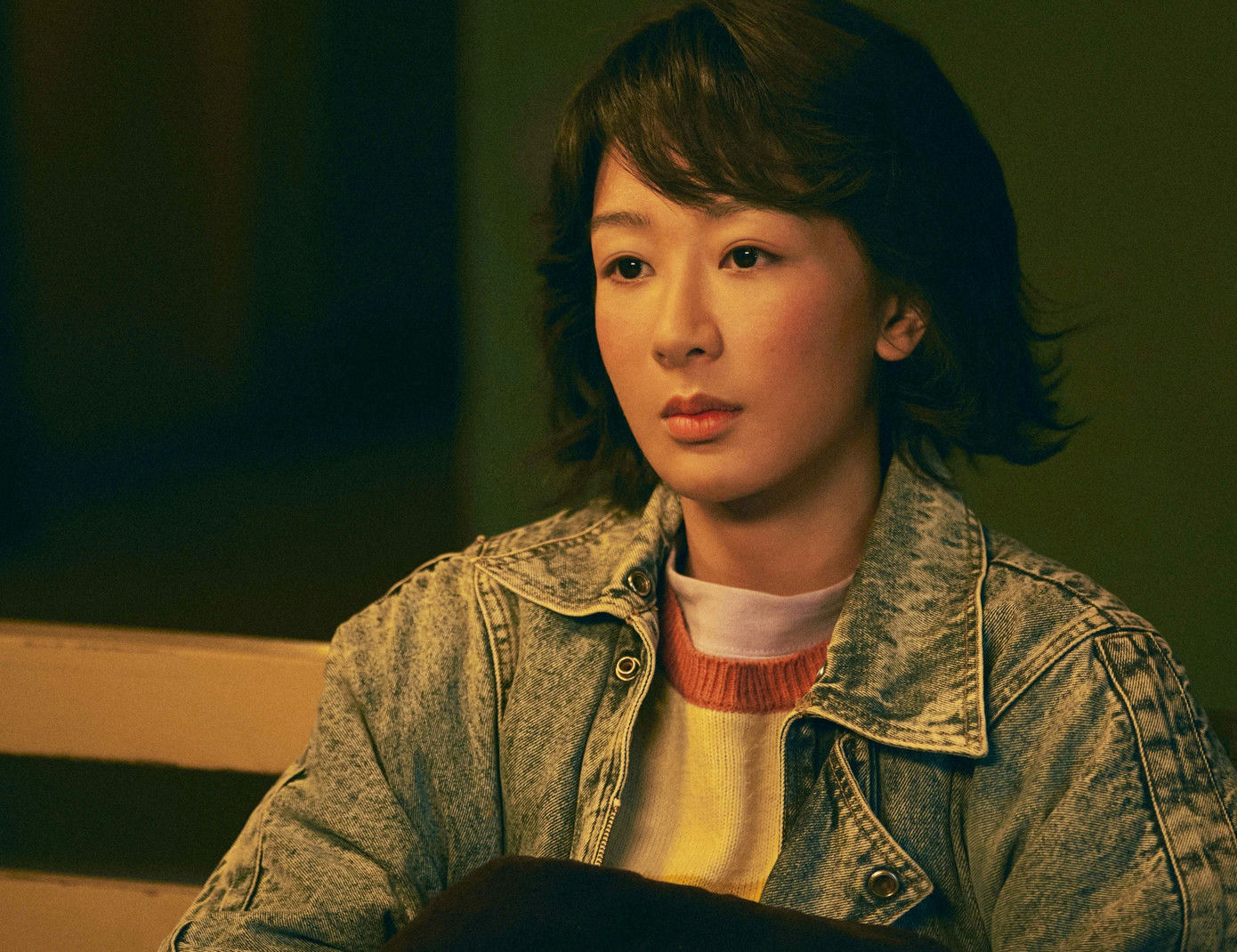
According to Sina, Born to Be Alive, starring Yang Zi and Hu Ge, has delivered disappointing results just three days after its premiere, with performance indicators continuing to decline. The setback has dealt a heavy blow to the reputation Yang Zi has worked hard to build over the past decade.
The drama airs on CCTV8, a major national television channel in China. However, its average rating for the first episode was only 1.77%, and subsequent episodes fluctuated without ever breaking the 2% mark. On iQIYI, the show’s popularity index has yet to surpass 9,000 points. Compared with Zhao Liying’s drama The Dream Maker, Yang Zi’s ratings are lower and fall short of the usual viewership standards for CCTV8.

Adding to the disappointment, Yang Zi’s performance has drawn mixed—largely negative—responses. She plays Bai Ju, a female police officer fighting poachers who hunt Tibetan antelopes and other protected animals on the Tibetan Plateau. Critics note that Yang Zi appears overly thin and lacking vitality, and that her action scenes—whether fighting, chasing suspects, shooting, or high-speed driving—lack power and precision. Her posture and movements were described as unconvincing for a police officer constantly facing life-threatening danger.
Yang Zi was also criticized for failing to control her facial expressions during emotional climaxes. Her features reportedly contort awkwardly, relying heavily on shouting rather than nuanced emotion. Her line delivery has also been called unclear, with some dialogue difficult to understand.

Viewers have drawn comparisons between Yang Zi and Dilraba Dilmurat in Sword Rose. Although Dilraba is often labeled the weaker actress, many felt her action scenes were more decisive, powerful, and visually appealing than Yang Zi’s.
This underwhelming performance has visibly damaged Yang Zi’s reputation. Some audiences now argue that the praise she received for her past acting was overly inflated, saying her performances are formulaic and limited to certain types of roles.

In reality, as actresses grow older, the pressure only increases. Senior stars such as Zhao Liying, Yang Mi, Liu Shishi, and Tang Yan have all stepped away from idol dramas to pursue serious, realistic works focused on social and family themes. However, such “everyday life” roles demand far greater depth, naturalism, and emotional range.
Yang Zi has also attempted to transition into serious dramas, but has yet to deliver a truly memorable role. Critics say she continues to bring the acting style of romance idol dramas into her new projects, resulting in performances that feel forced and even weaker than those of non-professional actors.
According to Sina, idol dramas benefit from romance-driven plots, large built-in audiences, eye-catching visuals, and dramatic storylines, allowing acting flaws to be more easily overlooked. Serious dramas, by contrast, demand more rigorous character development and realistic storytelling, with fewer sensational moments. As a result, not every idol actor succeeds in making the transition. Previously, Zhao Lusi, Cheng Yi, and Luo Yunxi have all faced failures, while Dilraba’s results in serious dramas have also been less than impressive.
For Yang Zi, the message is clear: if she hopes to survive and thrive on this more demanding path, far greater effort and transformation will be required.
Sources: K14