



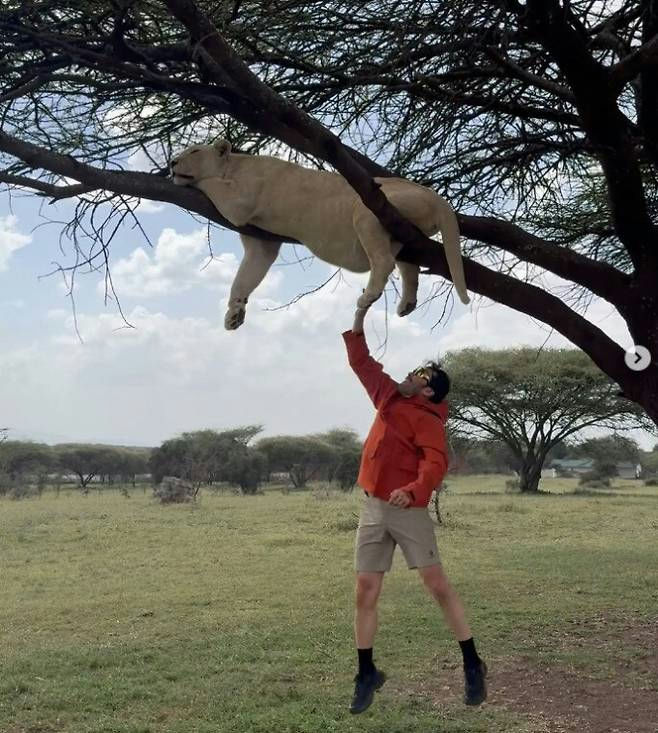
On February 15, News1 reported that an Africa-based travel agency specializing in safari tours criticized the image through its social media account. The post featured Noh Hong-chul posing behind a sleeping lion, accompanied by a pointed caption questioning the animal’s condition.
The travel agency claimed the lion was not merely asleep but sedated.
“Does this lion look normal to you? Even if we try to package it as a fairytale-like ‘sleeping lion,’ this lion is under the influence of drugs,” the post read. The account further alleged that tranquilizers or sedatives are often administered to lions in such tourist settings, rendering them lethargic and unresponsive. It stated that behaviors such as walking drowsily beside humans, allowing physical contact, or failing to resist being touched are signs of chemical sedation.

The post also referenced the 2015 documentary Blood Lions, which exposed practices in parts of Africa where lions are reportedly drugged under the guise of conservation, research, or orphan care. The documentary alleged that some animals suffer organ damage, premature death, and inbreeding to continuously produce cubs for tourism activities.
After the criticism surfaced, online communities began debating Noh Hong-chul’s responsibility in the situation. Some netizens expressed outrage, commenting, “How far can human ugliness go?” and “Awareness of animal rights is still too low.” Others questioned the intent behind posting such a photo, saying it made them uncomfortable.

However, a number of users defended the broadcaster, arguing that he may not have been aware of the alleged sedation. “He probably didn’t know the lion had been drugged,” some wrote. “It doesn’t seem like he knowingly participated in animal abuse.”
As of now, Noh Hong-chul has not issued an official statement regarding the controversy. The incident has reignited discussions about ethical wildlife tourism and the responsibility of public figures when sharing travel content involving animals.
Sources: sidae