



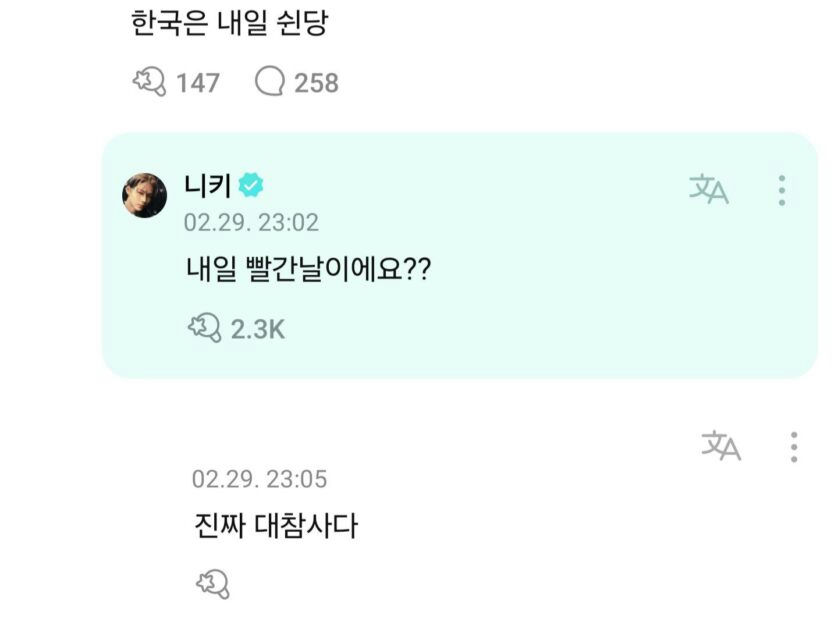
A recent online discussion has sparked debate after claims surfaced that some K-pop idols are prohibited from posting on social media and fan messaging platforms on March 1, Korea’s Independence Movement Day.
The controversy began when a user on X (formerly Twitter) responded to a question about why idols rarely appear on fan communication apps like Bubble on that date. The reply claimed that several entertainment companies intentionally restrict their artists from posting that day. According to the user, this policy was not always in place but was introduced after a series of high-profile incidents involving male idols.

In previous years, several idols faced backlash for sharing Japanese-related content on Korea’s national independence holidays days that commemorate liberation from Japanese colonial rule. Given the historical sensitivity surrounding March 1 and Liberation Day (August 15), such posts were widely criticized by Korean netizens as inappropriate or tone-deaf.
One example frequently cited involved Ni-ki of ENHYPEN. During a fan interaction, Ni-ki appeared unaware that the following day was a national holiday in Korea. When informed it was Independence Day, he reportedly responded that he was “jealous” of the day off, prompting criticism from some online users who felt idols promoting in Korea should be more familiar with the country’s history.

Another case involved Hyunjae of THE BOYZ, who once recommended the Japanese song “Leo” by Yuuri on Independence Day. Although the recommendation itself was not political, the timing led to controversy.
Media outlets have also previously grouped together names such as Felix, Yeonjun, and Junseo in discussions about past holiday-related controversies, further fueling public scrutiny.

As a result of repeated incidents, some agencies are rumored to have adopted a preventative approach by limiting artists’ online activity on historically sensitive dates. Supporters of the measure argue that it helps avoid unnecessary misunderstandings and protects idols particularly foreign members from backlash.

However, many netizens disagree with the idea of imposing blanket bans. Critics argue that education, rather than restriction, is the better solution. Some comments online suggested that companies should provide thorough history lessons to trainees, especially foreign idols, before debut. Others expressed frustration, saying that cultural awareness should be a basic expectation for artists working in Korea.
The debate highlights the complex intersection of pop culture, national history, and global fandom. As K-pop continues to expand internationally, agencies face increasing pressure to balance cultural sensitivity with artistic freedom. Whether social media restrictions are the right solution remains a divisive topic among fans and observers alike.
Sources: Koreaboo