



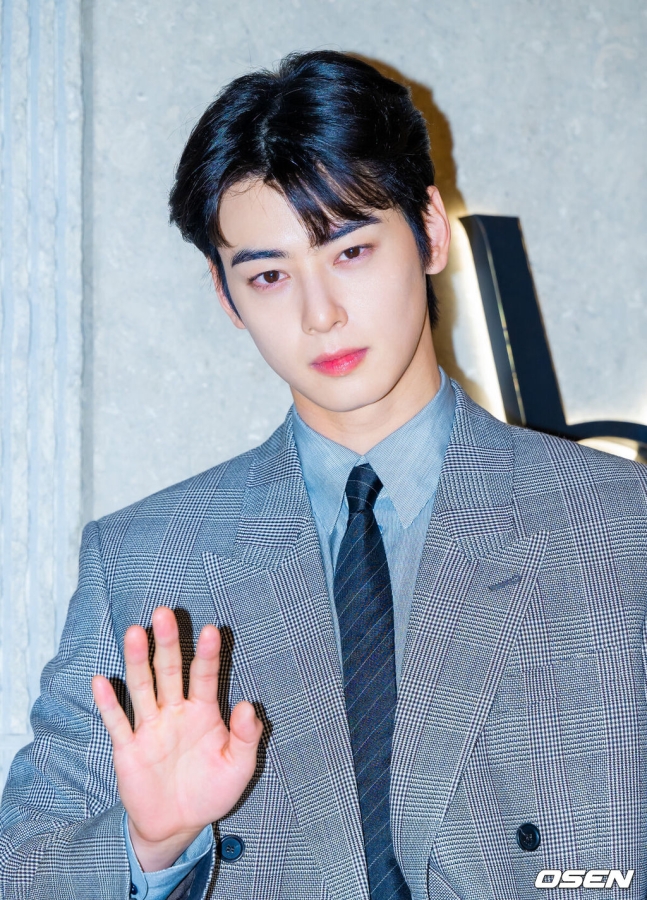
According to the Korea Exchange, Fantagio’s share price fell to 482 won on January 22, the day Cha Eun Woo’s tax evasion allegations surfaced, and continued its downward trend, closing at 480 won on January 23. The sharp decline clearly coincides with public awareness of the allegations surrounding Cha Eun Woo.
Shareholders are assessing the situation as an “owner-risk–level crisis,” one that has shaken Fantagio’s very foundation due to its heavy dependence on Cha Eun Woo. Trading volume surged dramatically—from 170,000 shares on January 21 to 260,000 shares on January 22, and 220,000 shares on January 23—suggesting a wave of panic selling following the emergence of the scandal.

In effect, Fantagio had been surviving on Cha Eun Woo alone. According to securities filings submitted by Fantagio between 2018 and 2020, ASTRO accounted for 38% of the company’s total revenue. Given Cha Eun Woo’s unrivaled public recognition among ASTRO members, this figure is widely interpreted as being largely attributable to him personally.
Fantagio’s Q3 2025 report, disclosed in November last year, shows that 90% of total revenue came from artist-related services, including appearance fees and advertising income. Industry insiders estimate Cha Eun Woo’s annual revenue contribution at 15–20 billion won, amounting to roughly 30–40% of Fantagio’s projected annual revenue of 50–70 billion won.
If Cha Eun Woo ultimately receives a finalized tax reassessment of 20 billion won and refuses or delays payment, the National Tax Service is highly likely to seize Fantagio’s settlement receivables related to his earnings.

Another major blow looms as well. As Cha Eun Woo’s image as a “face genius” and “upright, exemplary youth” deteriorates, companies that once hired him as a brand model are expected to file penalty lawsuits, typically demanding compensation worth two to three times the original modeling fee. Including legal costs, this could result in severe cash losses for Fantagio.
Fantagio had attempted to offset Cha Eun Woo’s military service hiatus by signing actor Kim Seon Ho, but reportedly already paid over 2 billion won in upfront contract fees. Recovering that investment is expected to take a considerable amount of time.
Already classified as a sub-500 won penny stock, Fantagio has recorded operating losses for several consecutive years. The departure or suspension of its core revenue source could trigger designation as a managed stock or even a substantive delisting review, raising the possibility of shareholder class-action lawsuits.
Cha Eun Woo is accused of diverting income through a corporation where he serves as an internal director and his mother, identified as Ms. A, acts as CEO. The National Tax Service has notified him of a tax reassessment of approximately 20 billion won, effectively the largest such case in Korea’s entertainment industry.
Some companies that had hired Cha Eun Woo as an advertising model have already removed his images, reflecting the sharply cooled public sentiment.
Fantagio has emphasized that the reassessed tax amount has not yet been finalized. In an official statement, the agency said:
“The key issue is whether the corporation established by Cha Eun Woo’s mother qualifies as a substantive taxable entity. This matter has not been finally confirmed or officially notified, and we plan to actively explain our position through lawful procedures regarding issues of legal interpretation and application.”
Attorney Noh Jong-eon, managing partner at Law Firm Jonjae, stated:
“If the company was aware that funds from a key artist—accounting for roughly 40% of its revenue—were flowing into a corporation owned by the artist’s mother and failed to disclose this, it could constitute an omission of ‘material information’ directly affecting the company’s survival, making it subject to class-action lawsuits.”
He added:
“The sharp increase in trading volume on the day before the negative news broke raises suspicions of insider information leakage. If insiders sold shares after knowing in advance about the National Tax Service’s notice, this would constitute an unfair trading practice in violation of Article 174 of the Capital Markets Act, carrying severe criminal penalties and liability for damages.”
Sources: Netizenbuzz