



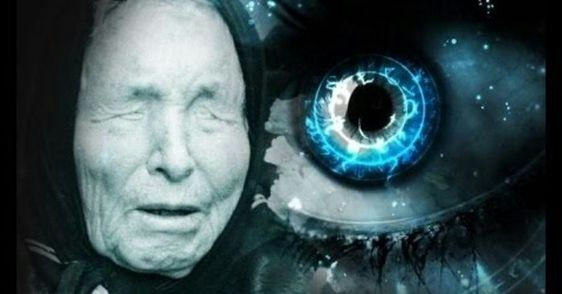
As 2026 draws near, predictions attributed to the late Bulgarian mystic Baba Vanga are once again stirring global intrigue. Born Vangeliya Pandeva Gushterova (1911–1996), Baba Vanga lost her sight at a young age and became widely known as the “Blind Seer of the Balkans.” Over the decades, she has been credited with predicting major world events — but her legacy remains steeped in myth, lacking any verified records or writings.
Despite this, media outlets in India and the UK — including Times of India and SHTC — have revived a list of four major events supposedly foretold by Baba Vanga for the year 2026. These “predictions” have triggered discussions for their striking resemblance to current concerns facing the world.
1. Extreme Natural Disasters and Climate Turmoil

Baba Vanga is said to have predicted a year marked by catastrophic earthquakes, volcanic eruptions, and unprecedented weather events, affecting up to 7–8% of the Earth’s landmass. Though this specific figure has no verifiable source, it aligns with growing scientific warnings about accelerating climate change.
Critics argue this “prediction” reflects humanity’s collective anxiety over environmental degradation rather than prophetic insight. Still, the timing feels eerily relevant amid real-life disasters increasingly making headlines.
2. Artificial Intelligence Surpassing Human Control
Another widely circulated claim is that AI will surpass human intelligence and begin making major decisions on our behalf by 2026. Baba Vanga reportedly warned of a time when machines would no longer merely assist but dominate critical areas of life, from finance and industry to daily routines.

While there’s no confirmed origin for this statement, it echoes today’s fierce debates around AI safety, ethics, and automation. As the world grapples with regulating powerful technologies, the prophecy feels less like science fiction and more like a plausible future scenario.
3. Global Economic Shakeups and Unstable Gold Markets
In a surprising twist, Baba Vanga is also linked to predictions about major economic turbulence in 2026 — particularly sharp, unexpected shifts in gold prices. This challenges the traditional notion of gold as a “safe haven” during crises.
Again, these predictions lack documented origins and are widely believed to be post-event interpretations. However, they mirror widespread fears about economic instability and inflation in an increasingly volatile global market.

4. Asia’s Rise and a New Global Power Order
Perhaps most politically charged is the claim that Baba Vanga foresaw a shift in global power toward Asia — especially China — in 2026. This prediction aligns with modern geopolitical analyses suggesting a move toward a multipolar world where Asian nations play a dominant role in economics and diplomacy.
Yet, as with most of her predictions, no direct evidence ties this forecast to Baba Vanga herself.

A Legend Shrouded in Mystery — and Skepticism
Despite the buzz, researchers and historians emphasize that Baba Vanga left no official writings, recordings, or verified transcripts. Most of the statements attributed to her surfaced years after her death, often through secondhand accounts or internet compilations.
Claims such as her predicting the COVID-19 pandemic have been widely debunked as retroactive associations. Nonetheless, in times of global uncertainty, Baba Vanga’s name continues to captivate the public imagination.
Whether seen as coincidence, projection, or prophecy, the resurfacing of Baba Vanga’s supposed 2026 predictions underscores the world’s deep-seated anxieties — about climate disasters, AI dominance, economic fragility, and shifting global power. Even in the absence of evidence, her legend reminds us how people seek meaning in chaos and clarity in the unknown.