



“Netflix, I’m really disappointed. I had high expectations since they brought in a famous director, but there was zero sense of immersion… How could they ruin a world-class artist’s performance like that?”
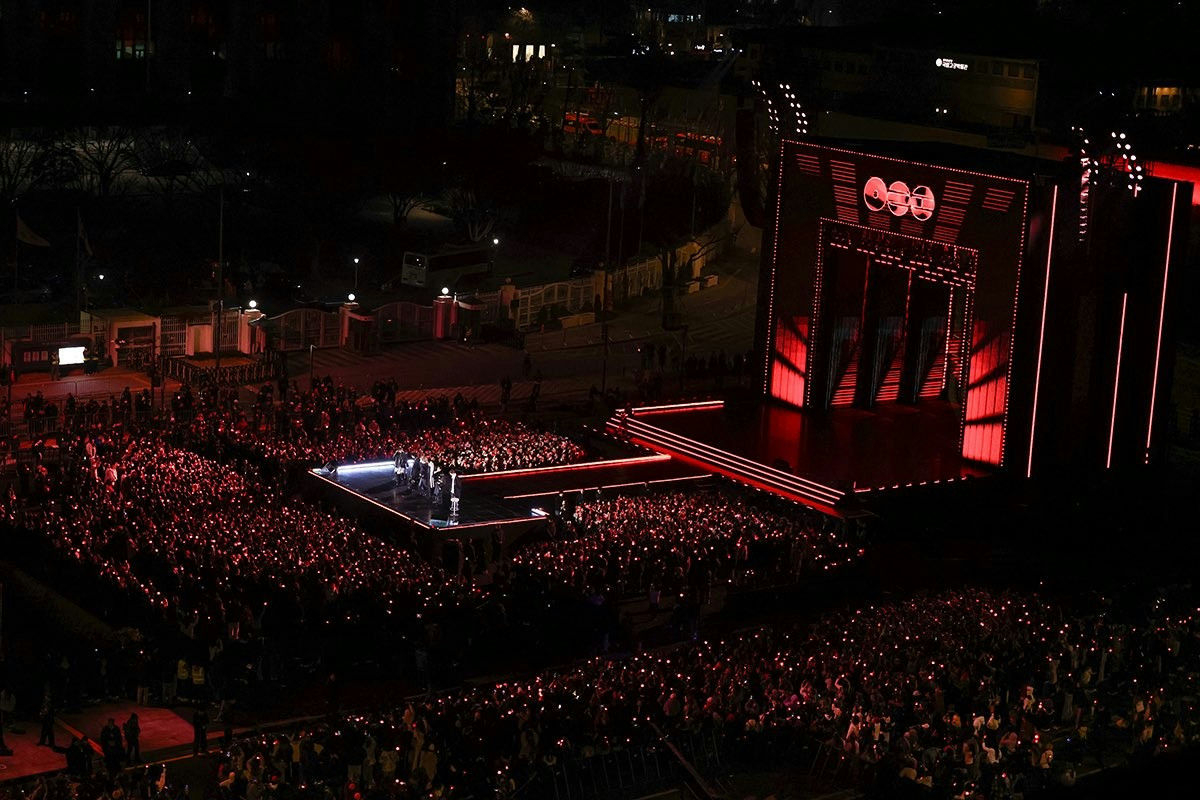
ARMYs have voiced their anger. Following BTS’s highly anticipated Gwanghwamun comeback concert on March 21, criticism has poured in worldwide, with many saying the show fell short due to Netflix’s poor production and direction. Critics argue that the platform lacked a proper understanding of K-pop’s essence.
“Bring in music show PDs”… frustration over camera work
According to global OTT ranking site FlixPatrol on March 23, BTS The Comeback Live: ARIRANG, which was livestreamed on March 21, ranked No.1 in 77 out of 89 countries in Netflix’s film and concert category. BTS’s 5th full album ARIRANG also set a new K-pop record, selling 3.98 million copies on its first day. Despite a 3-year and 9-month hiatus, the group’s stage performance remained as powerful as ever.
However, industry insiders and fans have offered a colder assessment, claiming that Netflix merely used BTS’s massive intellectual property for promotional purposes while neglecting the quality of the stage production itself.

Immediately after the concert, online communities and social media were flooded with criticism targeting Netflix’s broadcast style and directing. Many compared it unfavorably to the polished production of Korean music shows, expressing strong disappointment.
Netizens commented, “The essence of K-pop lies in synchronized choreography and camera work that captures each member’s highlights, but Netflix killed the energy with random full shots and static long takes,” “Bring in M Countdown PDs,” “Music show PDs win this round,” “The stage looked empty and even the audience seemed underwhelming,” “The sound quality didn’t match the artist’s level,” “They didn’t even capture ARMYs gathered at City Hall, just kept emphasizing the Netflix logo,” “Subtitle disaster,” and “There’s zero understanding of BTS, live performances, or K-pop.” Some even went as far as saying, “BTS was used by Netflix.”

The criticism intensified as fan-recorded videos from the venue spread across platforms like YouTube. One fan who watched the livestream shared that the performance initially felt underwhelming on Netflix, but after seeing fan cams online, realized the group had actually delivered an intense, high-energy performance. The fan concluded that the issue lay entirely with the production team’s failure to convey the atmosphere.
Lack of K-pop understanding… focus on Netflix branding
The BTS comeback show was reportedly directed by Hamish Hamilton, a world-renowned director known for producing major global events such as the Super Bowl halftime show, the Oscars, and the Grammys. Despite his reputation, critics believe his understanding of K-pop was lacking.
An industry insider stated, “K-pop is not just music it’s the pinnacle of visual art. This outcome reflects a global platform treating it as just another pop concert without fully understanding its nuances.” They added that the result might have been better if experienced Korean production teams had been given full control.

There were also criticisms regarding the absence of pre-recording systems commonly used in Korean music broadcasts. These systems allow producers to capture performances from multiple angles and select the best shots for live airing, ensuring optimal quality.
Another broadcasting expert pointed out that camera work is more than documentation—it interprets the music. They noted that the concert showed little understanding of choreography, lyrics, or stage movement. While there may have been logistical constraints such as copyright or location permits, the lack of coordination suggested the absence of K-pop specialists in the production process.

Stage design also came under scrutiny. One concert insider explained that the layout made it difficult for many audience members to see the performers, suggesting that more thoughtful staging such as moving platforms or closer interaction could have improved the experience. They described the concert as one-sided and lacking consideration for the audience.
Ultimately, the BTS Gwanghwamun concert has become a case study showing that even massive budgets and global platforms cannot replace the detailed craftsmanship and emotional depth that define K-pop performances.
Sources: Daum