



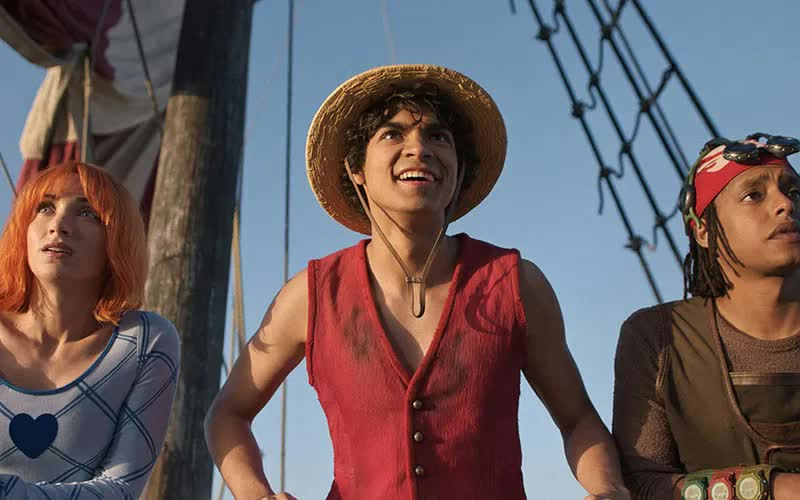
After decades of being labeled a “curse” in the film industry, anime live-action adaptations are finally experiencing a powerful resurgence—and 2026 is shaping up to be a defining year. With improved production quality, better casting choices, and deeper respect for original material, these projects are gradually winning back audience trust.
Leading the charge is none other than One Piece, which continues to dominate as the gold standard for successful adaptation. But beyond this global phenomenon, several other notable titles are competing to prove that live-action anime can truly thrive.

At the lower end of the ranking sits Bet (live-action adaptation of Kakegurui). Despite the original’s intense psychological battles and high-stakes gambling themes, the adaptation has been criticized for simplifying its narrative into a more generic revenge storyline. The lack of tension and slow pacing make it difficult to capture the chaotic brilliance of the source material.

Another risky project is Bloody Smart, inspired by the works of Junji Ito. Known for his disturbing and surreal horror style, Junji Ito’s creations are notoriously difficult to translate into live-action. Even with his involvement, the challenge of recreating his signature body horror visuals remains a major obstacle.

Meanwhile, Samurai Champloo, based on the cult anime by Shinichiro Watanabe, brings both excitement and concern. The original’s unique blend of Edo-era storytelling and hip-hop culture is hard to replicate, especially given the mixed track record of its production studio.

On a more promising note, Kingdom (adapted from the manga by Yasuhisa Hara) continues to impress. Its large-scale battle scenes, practical sets, and strong narrative pacing have helped it surpass even some early anime adaptations, proving that historical epics translate well into live-action format.

Action-comedy Sakamoto Days is also gaining attention for its grounded combat style and humor. Unlike fantasy-heavy adaptations, its reliance on physical action rather than CGI-heavy elements gives it a clear advantage in maintaining realism and entertainment value.

Sports anime adaptation Blue Lock stands out for a different reason. Developed with a focus on realism, the project emphasizes authentic football training and choreography, aiming to correct the shortcomings of its anime counterpart’s animation.

In contrast, Look Back, adapted from the manga by Tatsuki Fujimoto and directed by Hirokazu Kore-eda, is expected to be a critical darling. With its emotionally driven story and minimal reliance on visual effects, the film is poised to resonate deeply with audiences and critics alike.

Still, no project comes close to the impact of One Piece. By choosing not to replicate the manga frame-by-frame but instead preserving its core themes—freedom, friendship, and inherited will—the series has redefined what a successful adaptation looks like. With Season 2 receiving widespread praise and Season 3 already in development, it remains the benchmark every other project is measured against.
As 2026 unfolds, one thing is clear: the era of failed anime live-actions may finally be coming to an end—and One Piece is leading the revolution.
Sources: Netizenbuzz