



The return of BTS to social media has once again ignited global fan excitement, with every update from the members drawing massive engagement. Among them, Jung Kook has emerged as one of the most active figures, especially on TikTok, where his dance covers and performance clips continue to go viral.
Most recently, Jungkook attracted widespread attention after participating in a dance challenge set to the track “Two.” With his signature precision and effortless stage presence, the video quickly amassed millions of views, once again demonstrating his immense global influence. As expected, the viral moment also brought renewed spotlight to the original song and its creator, Canadian rapper bbno$.

Shortly after, bbno$ responded directly to Jungkook’s video through comments and follow-up posts across his social media platforms. While such interactions are common in today’s digital music landscape—where artists often capitalize on viral trends—the situation soon sparked debate within the fandom.
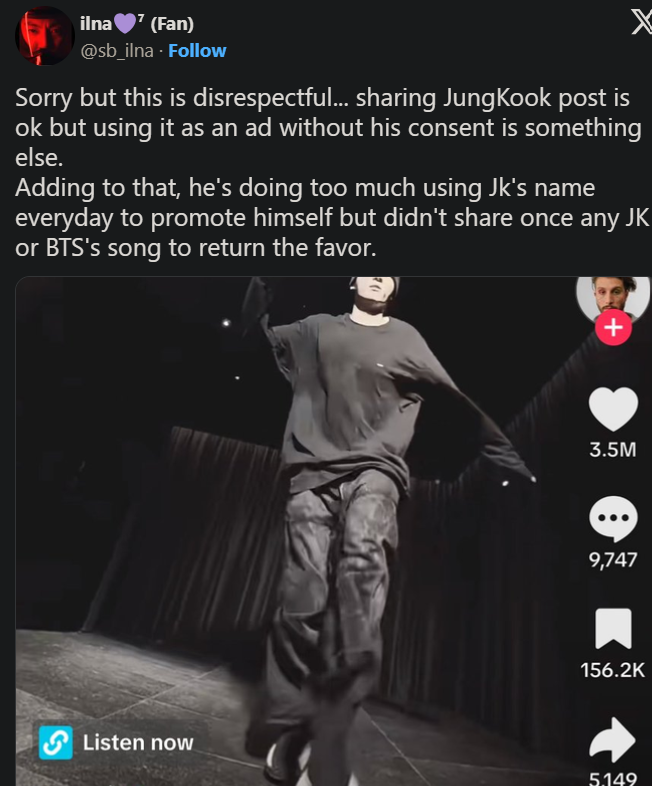
A portion of ARMY voiced criticism, accusing the rapper of “clout chasing” and leveraging Jungkook’s global popularity for personal promotion. Some fans questioned the authenticity of his engagement, suggesting that the interaction felt more strategic than genuine.

However, not all reactions were negative. Many fans defended bbno$, arguing that as the original artist behind “Two,” he has every right to acknowledge and amplify the song’s viral traction. In their view, utilizing social media momentum is a natural and even necessary part of modern music promotion.
Meanwhile, more neutral observers pointed out that Jungkook’s immense influence inevitably creates a ripple effect—where even minor interactions become magnified and scrutinized. In such a context, the line between genuine artistic exchange and perceived opportunism becomes increasingly blurred.
Despite the ongoing debate, one thing remains clear: Jungkook’s impact is powerful enough to spark global conversations with just a single short-form video. The situation not only highlights his top-tier status in the entertainment industry but also underscores how digital platforms continue to reshape the dynamics of fame, promotion, and public perception in today’s music scene.