



After more than three years since the release of BORN PINK, BLACKPINK officially reunited as a full group with their third mini-album DEADLINE, released on February 27, 2026. The title track GO immediately sparked heated discussions—not only for its EDM-hip hop production but also for its dense, symbolic visual narrative that constructs a futuristic universe where four women control the axis of a new world order.

From its opening frame, GO signals a conceptual shift. While BLACKPINK previously embodied a bold “girl crush” feminism, this comeback leans toward abstraction and metaphysical imagery. Directed by Rima Yoon and produced by Rigend Film—known for visually ambitious projects—the MV builds a cohesive sci-fi world powered by seamless transitions and complex VFX.
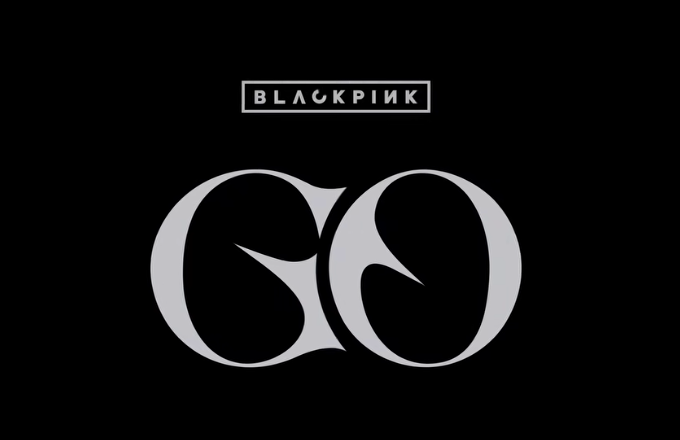
The logo itself establishes the conceptual backbone. The fluid design resembles the infinity symbol, suggesting BLACKPINK as an eternal current without pause. When flipped, the symbol evokes both the number 8 and an hourglass—mirroring one of the DEADLINE album versions released by YG. The paradox between infinity (GO) and finitude (DEADLINE) forms the central tension of the comeback: time may pass, but trajectory does not stop.

Lyrically, GO is a declaration of autonomy. The song abandons romantic storytelling in favor of sharp affirmations about breaking imposed “deadlines” and rewriting the rules. The line “My whole crew with me, if I go then they go too” reinforces unity—not only among the four members, but also with their fandom. The recurring butterfly motif symbolizes transformation: stillness to flight, endurance to radiance.
Visually, the MV constructs a submerged world pierced by a massive rotating metal pillar. The imagery evokes Mount Meru from Hindu and Buddhist cosmology—a sacred axis mundi regarded as the center of physical and spiritual universes. The swirling ground beneath resembles the yin-yang symbol found on South Korea’s national flag. By physically gripping and turning the axis, the members position themselves as creators rather than participants in the system.
Parallel to this is the recurring image of a ship battling the ocean. The visual echoes the Biblical Great Flood and Noah’s Ark narrative. However, in GO, BLACKPINK are not passengers preserving life—they are captains steering against chaos. Their return after a prolonged hiatus is framed as a reconstruction of global order driven by their motion.

The repeated appearance of an oar also drew attention. International fans interpret “oar” as shorthand for “of a revolution,” connecting back to the group’s iconic 2018 lyric, “BLACKPINK is the revolution.” The symbolic callback bridges musical eras and reinforces continuity across their discography.
Another striking visual features Earth rendered like a giant eye. The symbolism suggests a dual perspective: the world watching BLACKPINK, and BLACKPINK viewing the world through BLINK. The slogan “GO” appears in multiple languages—Korean, English, Japanese, Chinese, Thai, Hindi, Spanish—solidifying their global positioning beyond aesthetic choice.

Beyond mythology, the comeback carries cultural weight. Prior to release, YG Entertainment announced a collaboration with the National Museum of Korea, illuminating the building in pink lights and displaying props and costumes from the GO MV. The move situates BLACKPINK within Korea’s broader cultural heritage narrative.
Mythological references deepen the cultural layer. Rosé suspended between sky and earth evokes Mago Halmi, a Korean creation goddess associated with restoring order. The imagery parallels the Chinese goddess Nüwa, who repaired the heavens. Jisoo’s translucent butterfly wings emphasize rebirth and longevity—symbols deeply rooted in East Asian iconography.

Traditional cloud patterns (Unmun) and the “Longevity” character appear throughout, referencing the Korean concept of the Ten Symbols of Eternal Life. By embedding these motifs into a cyberpunk environment, the MV merges palace-era symbolism with futuristic cosmology.
Jennie visually confronts crushing external pressure, while Lisa sheds a mask—an unmistakable metaphor for authenticity and liberation. Together, the four members construct not merely a music video, but a mythic universe where tradition, technology, revolution, and femininity coexist.
Ultimately, GO is more than a comeback single. It is a layered cultural statement positioning BLACKPINK as architects of their own mythology. Whether praised or debated, the scale of symbolism embedded in GO confirms one fact: BLACKPINK are not just returning—they are redefining the axis on which their narrative turns.